Sodom and Gomorrah
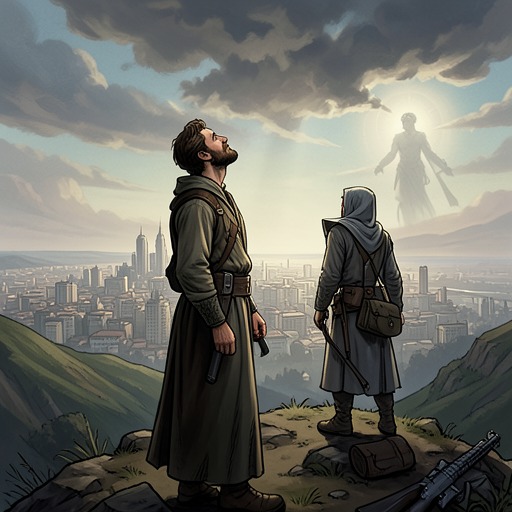
Don't Leave God Alone: How to Get God's Attention, Remain in His Presence, and Even Change His Mind to Make a Difference in Your WorldSodom and Gomorrah are presented as cities whose destruction became a warning about the consequences of abandoned intercession. In the book’s interpretation of Genesis 18–19, their fate was not treated as a fixed outcome beyond human influence: God spoke with Abraham beforehand, and Abraham’s persistence—or failure to persist—was made central to the question of whether judgment might be delayed or withheld.
Setting and Imminent Judgment
The narrative begins after God had gone to speak with Abraham about what He intended to do. The text emphasizes that God could have destroyed Sodom and Gomorrah without explaining His purpose, yet He chose to disclose the impending judgment to Abraham, calling attention to the relationship between divine action and human intercession. The cities therefore enter the account not merely as places of wickedness, but as communities whose fate is placed before a human mediator.
The judgment itself is described in stark terms: God rained brimstone and fire on Sodom and Gomorrah, destroying the cities, the surrounding plain, their inhabitants, and everything that grew from the ground. The devastation functions as the irreversible consequence of the moment when intercession ended. Once God had gone His way, Abraham returned to his own place, and the cities were lost.
Abraham’s Appeal and Its Limit
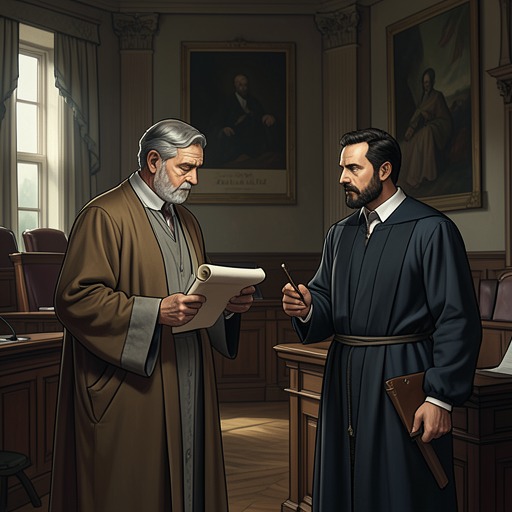
Abraham initially stood in God’s path and challenged the justice of destroying righteous people together with the wicked. He asked whether the Judge of all the earth would act justly and proposed that the cities be spared for the sake of fifty decent people. God agreed to spare them for that number, and Abraham continued lowering the number of righteous people for whom he requested mercy.
The sequence resembles Moses’s plea for Israel after the Golden Calf apostasy. Abraham counted downward until he reached ten, and God agreed that the cities would be spared if ten righteous people could be found. Yet Abraham stopped there. The book argues that he gave up too early, treating the number ten as the end of the appeal instead of continuing to ask whether judgment might be suspended for fewer righteous people.
This stopping point is interpreted as the decisive failure. The author imagines that Abraham might have continued by asking God to spare the cities for one righteous person, perhaps identifying his nephew Lot as the reason for mercy. The claim is not that such an outcome is recorded as fact, but that Abraham’s unfinished intercession exposed the cost of leaving God alone. In this reading, Sodom and Gomorrah were destroyed because Abraham stopped counting when he could have continued pleading.
Contrast with Moses and the Logic of Intercession
The cities’ fate is set against Moses’s conduct during Israel’s idolatry. When God told Moses to leave Him alone and threatened to consume the Israelites, Moses did not withdraw. He appealed to God’s reputation among the Egyptians, recalled the covenant promises made to Abraham, Isaac, and Israel, and pleaded for mercy. The result was that judgment was spared and an entire nation survived.
Abraham had begun in the same posture of bold mediation, questioning whether the good should be destroyed with the bad. The contrast lies not in the beginning of their prayers but in their endurance. Moses persisted when God appeared to demand separation; Abraham stopped after reaching ten. The book therefore treats the difference between the two men as a difference in determination rather than access: both were able to speak, both were given grounds for intervention, but only Moses continued until the crisis changed.
Sodom and Gomorrah consequently become the negative counterpart to Israel’s deliverance. The destruction demonstrates what may happen when a person who has been invited to intercede withdraws, while the spared nation demonstrates what persistent pleading can accomplish. The account assigns unusual weight to one person’s prayer, presenting the destiny of cities and nations as potentially responsive to a righteous cry.
Cities, Nations, and the Continuing Application
The lesson is extended beyond the ancient cities to present-day cities and nations. The book argues that silence about communal conditions leaves destructive forces unchallenged, while persistent prayer can confront the influences associated with violence, profanity, corrupt wisdom, defiled sanctuaries, iniquity, and terror or fear. Sodom and Gomorrah therefore serve as a model of civic judgment within a broader argument that prayer is a form of public intervention.
That argument is illustrated through the author’s prayer for the United States. During prayer for the nation, he describes receiving a message that the country was being given another chance, in the manner of Nineveh, and that earlier prayers for the nation still mattered. He connects this experience with Moses’s willingness to stand for a threatened people and concludes that believers should continue praying for their nation rather than anticipate its destruction.
The same principle is applied to collective prayer concerning storms in Florida. After a first prophetic warning about back-to-back hurricanes, people prayed but the storms still came. The following year, hundreds prayed with greater fervency against a specifically named storm, and it did not reach them. The author presents the difference as determined persistence: the later prayer group refused to accept a negative answer based on the previous experience. In this framework, the destroyed cities remain a warning that intercession must continue, while later stories of deliverance are offered as evidence that collective persistence can alter threatened circumstances.
Narrative and Thematic Significance
Sodom and Gomorrah occupy the book as a tragedy of interrupted mediation. Their destruction is not narrated only as punishment for evil; it is also used to dramatize the ethical responsibility of the person who knows judgment is approaching and has an opportunity to plead for mercy. Abraham’s departure marks the narrative’s crucial turn: when he stops pursuing the matter, God goes His way, and the cities pass beyond the reach of the conversation.
The account also defines the book’s central principle of refusing to leave God alone. Persistent prayer is described as shameless, bold, determined, pressing, entreating, and unwilling to give up. The same posture is urged for sickness, troubled marriages, churches, crime rates, cities, and nations. Sodom and Gomorrah thus function as a cautionary contrast to Moses, Hezekiah, Elijah, the church of Acts, the Syrophoenician woman, and blind Bartimaeus: each figure is remembered for continuing to cry out, whereas Abraham is remembered for stopping before the possibility of mercy had been fully pursued.